
Patrick Steinhaus, on December 09, 2025, 05:00 AM
We understand that every manufacturing environment is unique. While SAP Digital Manufacturing (DM) provides a stable and continually improving foundation, each implementation still requires a degree of customization to reflect specific processes and plant conditions. The system’s strength lies in its adaptability, but how that flexibility is used determines whether it delivers lasting value or unnecessary complexity.
The Role of Production Process Design
Production Process Design (PPD) allows manufacturers to model process logic through a graphical interface rather than traditional coding. It connects directly with DM shop-floor data and external APIs, making it possible to develop and validate extensions more quickly. The emergence of low-code tools means domain experts, often called “citizen developers,” can define and iterate on production logic without depending entirely on software engineers. This shortens feedback loops and allows faster prototyping.
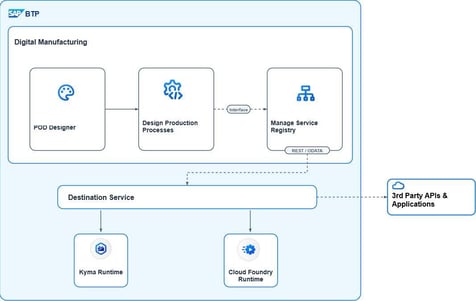
Balancing Simplicity & Control
Low-code development lowers the entry barrier but also introduces risks. Without clear governance, ad-hoc logic can grow rapidly, creating redundant or inconsistent processes that affect system performance. Several common causes of increasing complexity include:
- Lack of reuse and modularization
- Missing naming conventions and structural guidelines
- Excessive dependencies between process steps
- Mixing technical logic with business rules
These challenges increase cognitive load, make testing harder, and slow down future changes.
Applying Software Development Principles
To keep systems maintainable, SAP DM projects benefit from established software development practices:
- Define clear inputs and outputs for each process
- Modularize logic into smaller, reusable sub-processes
- Use consistent naming and layout conventions
- Focus on structure rather than long chains of conditions
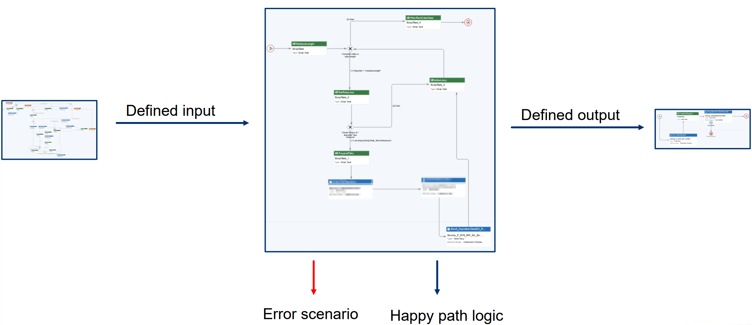
This modular approach allows teams to build tested, reusable blocks that can be orchestrated across global templates and reused in other plants or scenarios.
Performance & Quality Assurance
Performance should be considered from the start. For example, replacing iterative script loops with optimized queries, such as using a CAP service to retrieve only the required data, can significantly reduce execution time.
Quality assurance is equally important. Typical safeguards include:
- Integrative testing of complete processes
- Unit testing of script tasks
- Syntax and linting checks
- Version control for transparency and rollback
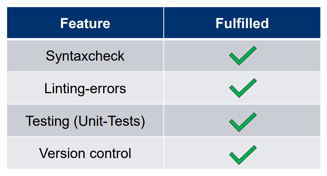
SYSTEMA’s internal testing environment demonstrates how automated unit tests for script tasks help identify errors early and improve reliability. Establishing such quality gates at the unit level helps maintain consistent performance as projects scale.
Takeaways for Manufacturers
Complexity often builds gradually, but its impact grows quickly. Recognizing this early helps teams prevent slowdowns and rework later. The key takeaways are clear:
- Address complexity from the start
- Apply modular design and quality gates early
- Choose the right level of technical depth for each use case
- Learn from previous iterations and refine continuously
Manufacturers adopting SAP DM can gain flexibility and speed when low-code tools are combined with disciplined development practices. Avoiding unnecessary complexity and emphasizing performance from the beginning ensures that innovation remains sustainable on the shop floor.
If you’d like to explore how these principles can be applied in your environment, request a consultation with our team to discuss practical steps for improving performance and maintainability in your SAP DM implementation.
Be the first to comment.